- Home
- Credit Score
- Credit Monitoring
Credit Monitoring
Credit monitoring is a powerful tool that empowers individuals to take control of their credit health. It involves regularly checking your credit report and score to ensure accuracy and detect abnormal activity. Your credit report, a comprehensive record of your borrowing and repayment behaviour, and your credit score, a numerical representation of your creditworthiness, are at your fingertips.
For those new to credit monitoring, understanding its importance is key to your financial security. By monitoring your credit, you can identify errors or fraudulent activity early, potentially saving you from financial harm. Moreover, credit monitoring keeps you informed about your financial standing and tracks your progress towards building good credit, providing a safety net for your financial future.
Credit monitoring services typically offer features such as alerts for changes to your credit report, identity theft protection, and credit score tracking. While some services may charge a fee, many offer free options.
This overview will explore the basics of credit monitoring, how it works, why it’s important, and the available options for monitoring your credit. By the end, you will better understand how credit monitoring can benefit you on your financial journey.

- Instant Results
- No Hidden Fees
- Secure & Confidential
- No Impact on Your Credit Report
I agree to the Terms and Conditions of TUCIBIL and hereby provide explicit consent to share my Credit Information with Urban Money Private Limited.
Verify your number
Enter 6 Digit OTP
Change mobile number
Table of Content
1. How Does Credit Monitoring Work? |
2. How to Monitor Your Credit Score |
3. Benefits of Credit Monitoring |
4. What is the Fee for Credit Monitoring |
How Does Credit Monitoring Work?
Credit monitoring monitors your credit report and lets you know if anything strange happens. Here’s how it works:
- Watching Credit Reports: These services keep track of your credit history. They look at your accounts, inquiries, and other credit stuff. If something fishy happens, they’ll send you a message.
- Spotting Identity Theft and Fraud: Cybercriminals sometimes steal personal information (like credit cards or Social Security numbers) and use it without permission. Credit monitoring helps catch them before it’s too late. For example, the service will tell you if someone opens a new credit card in your name.
- Tracking Credit Scores: Some services also give updates on your credit scores. This helps you see how good your credit is, which can help you plan for things like getting a loan or a mortgage.
- Picking a Service: These services come in different types and prices. Some are free, so just watch your credit score. Others cost money, but keep an eye on more things, like your bank accounts and credit cards. Think about what you need and pick the right service for you.
How to Monitor Your Credit Score
Urban Money provides you with an easy way to monitor your credit score for free! Following are the ways to access your credit score on Urban Money’s website:
- Visit the Urban Money’s website. Go to our credit score webpage. Access the credit score site.

- Complete the form with basic personal details such as Name, Mobile Number, and Email Address. This will prompt Experian to send a One-Time Password (OTP) to the provided phone number.
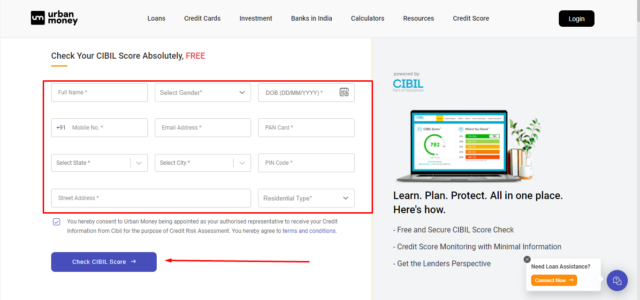
- Verify that the OTP was received and that your credit report will appear on the screen.
Simultaneously, Experian will send a copy to the registered email address. You also have the option to download the report in PDF format. Authenticate the OTP.
However, if you encounter difficulties accessing your credit report using this method, you may need to provide additional information such as Permanent Account Number, City, and Gender. Once these details are verified, your credit report will be displayed, and a copy will be sent to your email.
If you still cannot view your credit report, you may need to complete a Q&A form designed by Experian to verify your identity. Upon submission of this form, you should be able to access your detailed credit report.
Benefits of Credit Monitoring
Credit monitoring offers various benefits:
- Early Detection of Suspicious Activity: It helps detect any unusual or fraudulent activity on your credit report, such as unauthorised transactions or new account openings, allowing you to take action promptly.
- Protection Against Identity Theft: Credit monitoring can prevent or lessen the damage caused by identity theft by alerting you to signs of theft, such as someone using your personal information without permission.
- Maintaining Financial Health: Monitoring your credit helps you stay aware of your financial standing and track changes in your credit score over time. This awareness enables you to make informed decisions and take steps to improve your creditworthiness.
- Peace of Mind: Knowing your credit is being monitored can provide peace of mind. You will be notified promptly of any suspicious activity, allowing you to address issues before they escalate.
- Access to Credit Score Information: Some credit monitoring services provide regular updates on your credit score, giving you insight into your creditworthiness and helping you understand how lenders may view you.
- Assistance in Financial Planning: Understanding your credit status through monitoring can aid in financial planning, such as preparing for major credit-related decisions like applying for loans or mortgages.
What is the Fee for Credit Monitoring
Urban Money offers free credit monitoring. All you have to do is visit the official Urban Money website and monitor your credit score for free!


 Written By

 Reviewed By
Last Updated: 28th April 2025
Latest from the Credit Score Blog
Get in-depth knowledge about all things related to Credit Score and your finances
Does having multiple credit cards affect CIBIL score?
It depends on how you manage them Holding several credit cards can boost your rating just as easily as it can drag it down. If you pay every bill on time and keep your balances low across all accounts, having extra cards
Does prepaying or foreclosing a loan early lower your score?
What is loan prepayment? Loan prepayment occurs when you pay a lump sum toward your principal balance before the scheduled EMI due date, while keeping the overall loan active. You can make partial prepayments to reduce y
Do credit limit increase requests affect your CIBIL score?
What is a credit limit increase? A credit limit increase, also known as a credit limit enhancement, raises the maximum amount of money your bank allows you to spend on a credit card. If your card currently carries a limi
Does closing an old credit card hurt your CIBIL score?
How credit history length affects CIBIL score Length of credit history contributes roughly 15% to your overall CIBIL score calculation. Credit scoring models favor stability. A long, uninterrupted paper trail proves to b
Duplicate Loan Account in CIBIL Report
What is a duplicate loan account entry in CIBIL? A duplicate loan entry in CIBIL refers to two or more account records that actually represent the same loan. For example, a borrower may have one personal loan from a bank
Credit Score vs Credit Utilisation Ratio
What is a credit score? A credit score is a three-digit numerical summary ranging from 300 to 900 that represents your creditworthiness to lenders. Indian credit bureaus: TransUnion CIBIL, Experian, Equifax, and CRIF Hig
CIBIL Score vs CIBIL Rank Difference
CIBIL score A CIBIL Score is a three-digit summary of an individual’s credit history. It ranges from 300 to 900, with a score closer to 900 generally indicating a stronger credit profile. The CIBIL score calculation is b
CIBIL vs Experian vs Equifax vs CRIF
What are credit bureaus? Credit bureaus, formally called Credit Information Companies (CICs), collect and maintain credit information supplied by banks, NBFCs and other credit institutions. They use that information to p
Debit Note and Credit Note
What is a debit note? A debit note is an official advice or notification confirming that money has been deducted from an account. Issued by a bank or financial institution, it formally notifies the customer that their le
Minimum Amount Due Credit Card CIBIL Impact
What is ‘minimum amount due’ on a credit card? The minimum amount due is the smallest payment a cardholder must make by the due date to keep the account from being treated as unpaid for that billing cycle. The minimum am
Credit Score for Loan Against Property
Why lenders check CIBIL for LAP Lenders review a CIBIL report to understand a borrower’s credit behaviour before approving a loan against property. It provides information about repayment history, outstanding debts, cred
Loan Restructuring Impact on CIBIL Score
What is loan restructuring? Loan restructuring is an arrangement in which a lender modifies the existing repayment terms to make a loan more manageable for a borrower facing temporary financial difficulties. The revised
CIBIL Score Above 700
CIBIL score range explained (300-900) The CIBIL score range runs from 300 to 900 and reflects a borrower’s creditworthiness based on their credit history. A higher score generally indicates stronger credit behavior.
How to Change Mobile Number in CIBIL
Why you may need to update your mobile number in CIBIL There are several routine reasons why borrowers need to refresh their contact details: Lost or switched phone number: You moved to a new primary mobile line and no
Bounced Cheque Immpact on CIBIL Score
Does a bounced cheque affect CIBIL? A bounced cheque indirectly hurts your CIBIL score only if it causes a default on a loan or credit line. To understand how missed repayments impact your CIBIL score, consider the recip

