- Home
- Credit Score
- Check Axis Bank CIBIL Score
Axis Bank CIBIL Score: How to Check and Improve Your Axis CIBIL Score
Why is your credit score significant? A strong credit score, ideally between 750 and 900, is a game-changer. It can speed up your loan approval, reduce interest rates, and smoothen your loan applications. Axis Bank even specifies the minimum credit score required for a home loan, personal loan, and credit card. So, carefully monitor your credit score as it can significantly open your doors to financial assistance when you need it the most!

- Instant Results
- No Hidden Fees
- Secure & Confidential
- No Impact on Your Credit Report
I agree to the Terms and Conditions of TUCIBIL and hereby provide explicit consent to share my Credit Information with Urban Money Private Limited.
Verify your number
Enter 6 Digit OTP
Change mobile number
Table of Content
How To Check Axis Bank CIBIL Score
To check your Axis Bank CIBIL Score, make sure to follow these steps:
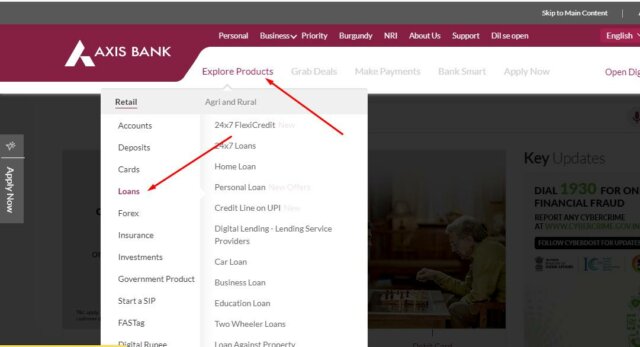
- Go to the official Axis Bank website.

- Navigate to “Explore Products” and select “Loans.”
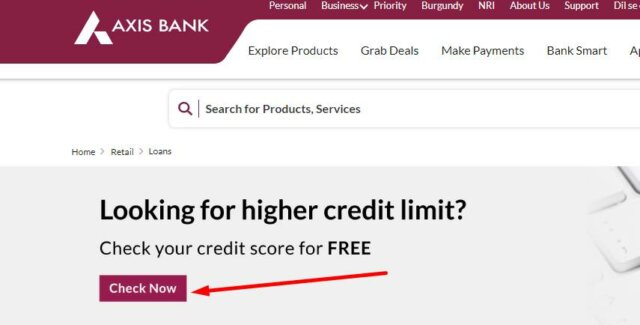
- Click on the Credit score banner.
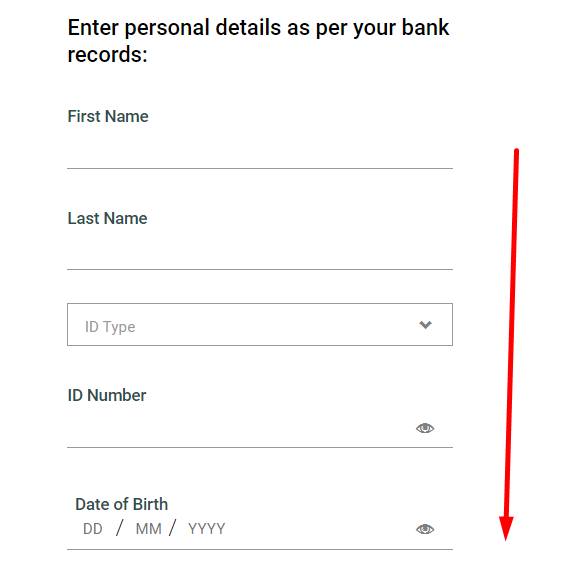
- Fill out the online form.
- Please enter your personal information, such as your email ID, name, date of birth, ID type, and mobile number.
- You will receive an OTP on your email address.
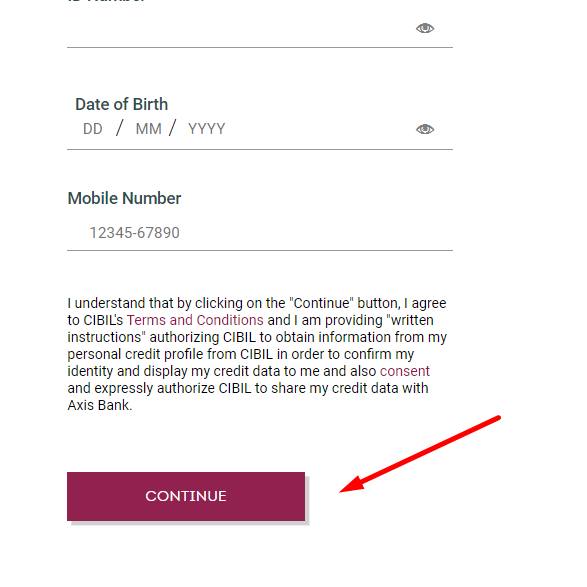
- Complete the registration process.
- Receive your complimentary credit report.
CIBIL Score for Axis Bank Home Loan
When you want to get a home loan from Axis Bank, your CIBIL score matters. Here’s the deal:
Your CIBIL score is like a report card for your borrowing history, with a range of 300 to 900. The higher your score, the better you’ve handled credit in the past. But if it’s lower, there’s room to do better.
Axis Bank usually wants a home loan applicant with a score of 751 or above. Those with a CIBIL score of 750 and below/no credit history can also avail of a slightly higher interest rate. This number shows you are good at handling money and paying back what you owe. Moreover, your score also affects the interest you will pay on your loan. If your score is good, you will likely get a lower rate, saving you money in the long run. Other than that, a high CIBIL score might even get you a bigger loan than you requested.
Axis CIBIL Score for Home Loan Eligibility
| Specification | Details |
| CIBIL Score | 751+ / <750 |
| Interest Rates | 8.50% – 9.50% |
| Processing Fees | 0.50% – 1% (Min: ₹10,000) |
| Prepayment | Floating: Nil / Fixed: Up to 2% |
| Loan Tenure | 5 to 30 years |
| Loan Amount | Min: ₹3 lakh / Max: ₹5 crore |
| Age | 21 to 65 years |
| Insurance | Required |
| Disbursement | 15-30 days |
| LTV | Max: 90% |
CIBIL Score for Axis Bank Personal Loan
Your CIBIL score is crucial to establishing mutual trust between you and your lenders. It showcases how reliable you are with money by reflecting on your borrowing and repayment history. Lenders rely on your credit score to decide whether to give you that loan or to establish strict rules to ensure timely repayments. Ideally, aim for a CIBIL score of 751 or higher. It increases your chances of loan approval and can secure better terms, such as lower interest rates and more favorable conditions.
Now, what shapes your CIBIL score?
- First off, making timely payments is a huge plus. Paying your bills on time is like a gold star for your score.
- Also, keep your credit card spending in check. It’s better for your score if you don’t max out your cards.
- Lenders also consider how long you’ve been borrowing money. The longer your credit history, the better it looks on your record.
And here’s a tip: having a mix of different loans, like a home loan and a credit card, can boost your score. But watch out for credit inquiries. Every time you apply for a loan or a credit card, it leaves a mark on your record. Too many marks can temporarily bring your score down.
Axis CIBIL Score for Personal Loan Eligibility
| Specification | Details |
| CIBIL Score | 751 + / <750 |
| Interest Rates | 10% – 24% |
| Processing Fees | 1% of loan amount (Min: ₹10,000) |
| Prepayment | Floating: Nil / Fixed: Up to 2% |
| Loan Tenure | 1 to 5 years |
| Loan Amount | Min: ₹15,000 / Max: ₹25 lakh |
| Age | 21 to 60 years |
| Insurance | Optional |
| Disbursement | Within 3-5 days |
| LTV | N/A |
CIBIL Score Required for Axis Bank Credit Card
The applicant must have a decent credit score to be eligible for an Axis Bank credit card; if their borrowing and repayment history indicates otherwise, they may not be eligible.
The CIBIL score required to qualify for an Axis Bank credit card is at least 650 or more. Having a higher score helps the bank build trust and increases your chances of securing a credit card with a generous spending limit. Occasionally, Axis Bank might consider issuing a credit card even if your score falls below this benchmark, particularly if you have a regular and healthy income and maintain a favorable debt-to-income ratio.
If your credit score is lower than expected, you still have a chance to avail of a credit card, but the eligibility criteria can become stringent. Thus, it is always advisable to maintain a healthy credit score so that you can avail yourself of a credit card from any bank at any time.
What are the Factors Affecting Your Axis Bank CIBIL Score
Your CIBIL score is a crucial factor that lenders consider when you’re applying for loans or credit cards. Let us take a look at the important factors that affect your CIBIL score:
- Payment History (35%): This is an important factor that significantly affects your CIBIL score. It shows if you are good at paying bills on time. Late payments or defaults can hurt your score, but being consistent helps.
- Credit Utilization Ratio (30%): This is about how much of your credit you use compared to what you are given. Using too much can lower your score, so it’s smart to keep it low.
- Duration of Credit History (15%): The longer you have been using credit responsibly, the better it is for your score. New credit card users might have lower scores because they haven’t built enough history yet.
- Credit Mix and Variety: Having a mix of different types of credit, like loans and credit cards, can be good for your score. It shows you can handle different kinds of debt responsibly.
- Number of Credit Inquiries: Every time you apply for credit, it leaves a mark. Too many marks can bring your score down temporarily, so it’s best to keep applications to a minimum.
Range Table of Axis Bank CIBIL Score
Let us take a look at the table below to understand the different ranges of CIBIL scores and the category to which each range belongs:
| CIBIL Score | Interpretation |
| 300-549 | Poor Score: High risk to lenders |
| 550-699 | Average Score: Repayment hurdles but potential for improvement. |
| 700-749 | Good Score: A decent credit score reflecting responsible credit behavior. |
| 750+ | Excellent: Qualifies for better loan deals |
Steps to Improve Your Low Axis Bank Credit Score
A below-average credit score indicates irresponsibility with repayments, which undermines the ability to establish trust between the applicant and the lender. If you have a below-average credit score and wish to improve it, here are the ways to improve your Axis Bank credit score:
- Timely Repayments: Pay your EMIs well before the due date. If you cannot pay on time, interest will be charged on the missed payments, which will lower your credit score. Hence, timely repayments are crucial to maintaining or improving your credit score.
- Settle Your Past-Due Balances: If you have any outstanding credit, make sure you pay it on time. Spending more than your budget and being unable to pay your EMIs will result in consolidated debt and significantly lower your credit score.
- Wise Usage of Credit Cards: Spending more than you can afford, knowing it exceeds your budget and might result in missed repayments, is not wise. Hence, take note of your budget and realize the maximum EMI you can afford to pay. Also, timely repayments are crucial. Therefore, moderate usage with timely repayments is one of the best ways to improve your credit score.


 Written By

 Reviewed By
Last Updated: 1st September 2026
Latest from the Credit Score Blog
Get in-depth knowledge about all things related to Credit Score and your finances
What is Credit Age?
Credit Age Meaning Credit age refers to the duration for which a borrower has held credit accounts, such as loans or credit cards. It indicates how long a person has had access to and managed credit, rather than simply c
CIBIL Score vs Loan Eligibility
CIBIL Score vs Loan Eligibility: How Are They Connected? A CIBIL score is one of the factors lenders may consider when assessing a borrower’s creditworthiness and repayment history. However, the relationship between CIBI
How Often is CIBIL Score Updated?
General update frequency (monthly cycle) The earlier fortnightly reporting system was replaced with a more frequent reporting framework from 1 July 2026. Under the current RBI framework: Credit institutions must submit
How payment history affects CIBIL score
Why payment history is the biggest scoring factor Payment history is a major part of the CIBIL score, but calling it the biggest factor would be inaccurate. CIBIL identifies four main factors: payment history, credit uti
Credit History vs Credit Score
What is credit history? Credit history is the record of how a person has used and repaid credit over time. In a CIBIL report, this includes credit facilities such as home loans, auto loans, personal loans, credit cards a
Consumer CIBIL Score vs Commercial CIBIL
What is a consumer CIBIL score? A consumer CIBIL Score is a three-digit measure of an individual’s creditworthiness, based on their personal credit history, and ranges from 300 to 900. A consumer credit report records lo
What is Credit Mix
What is credit mix? A CIBIL report can contain several credit accounts, and credit mix refers to how these accounts are distributed across different borrowing categories. An asset backs secured credit; common examples in
CIBIL Score for NRI
Do NRIs have a CIBIL score? Yes, an NRI can have a CIBIL score if CIBIL member institutions in India report their credit information. This can include an Indian home loan, personal loan, credit card, or other reported cr
How to Freeze CIBIL Score?
Is a full credit freeze available in India? Yes, a full credit freeze in India is available in India, but it must be executed individually. To secure complete protection, a consumer must manually activate a freeze or loc
How to check a company CIBIL Score
What is a company CIBIL Score? The term company CIBIL Score commonly refers to a business’s CIBIL credit standing. CIBIL uses different products for businesses and individuals. A CIBIL Company Credit Report (CCR) records
Use of CIBIL score
What is a CIBIL score? A CIBIL Score is a three-digit summary of an individual’s credit history and ranges from 300 to 900. CIBIL calculates it using information in the Accounts and Inquiries sections of the CIBIL Report
Trade Credit
Trade credit meaning Trade credit is credit extended by one business to another, allowing the buyer to purchase goods or services and pay later. In simple terms, the supplier becomes the creditor, and the buyer becomes t
How to Get 900 CIBIL Score
Is 900 the maximum CIBIL score? Yes, 900 is the maximum CIBIL score on the scale set by TransUnion CIBIL. The scoring model runs strictly between 300 and 900. A 300 rating shows high default risk, while 900 reflects a cl
Methods of Credit Control by RBI
What is credit control and why does the RBI use it In the Indian banking system, credit control refers to measures that influence the volume, cost, and availability of loans and advances. The Reserve Bank of India uses m
Grameen Credit Score
What is the Grameen Credit Score? The Grameen Credit Score is designed to provide a more suitable way of evaluating the creditworthiness of people in rural areas. In simple terms, the Grameen credit score is a credit ass

