- Home
- Credit Score
- Cibil Report Access Download
How to Check, Download, and Understand Your CIBIL Report

- Instant Results
- No Hidden Fees
- Secure & Confidential
- No Impact on Your Credit Report
I agree to the Terms and Conditions of TUCIBIL and hereby provide explicit consent to share my Credit Information with Urban Money Private Limited.
Verify your number
Enter 6 Digit OTP
Change mobile number
Table of Content
Do you often find that your credit score is limiting your opportunities? If yes, then you are not alone! But what if you could unlock better loan rates, lower insurance premiums, and even your dream rentals by improving your CIBIL score? The path to financial freedom starts with realising the power of your CIBIL score.
A credit score is a numerical representation of an individual’s creditworthiness, used to assess their ability to repay borrowed funds. Typically ranging from 300 to 900, the highest score signifies a reliable borrower. Having a high credit score for loan and credit card applications is good. If your score is low or in the lower range, you haven’t been responsible for paying back loans or debts on time.
A strong CIBIL score can be your greatest asset, from effortlessly securing loans to negotiating improved credit terms. However, this number remains a hurdle for many because of misunderstandings and miscommunication.
We will help you improve your financial standing. This will involve making payments on time and using credit wisely. Through this blog, we aim to ensure your CIBIL score accurately represents your ability to borrow money.
How do you check and download the CIBIL Report?
Here are three simple steps to access your CIBIL score via Urban Money without charges.
- Step 1: Go to our credit score webpage. (https://www.urbanmoney.com/credit-score)

- Step 2: Fill in your personal information, such as your Name, Mobile Number, and Email Address. Experian will send you a one-time password (OTP) to your provided phone number.
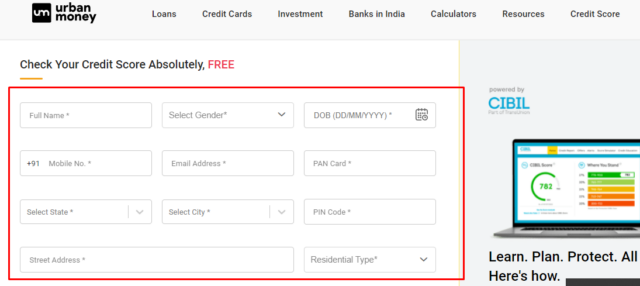
- Step 3: Verify the OTP, and your credit report will appear on the screen. Experian will also send a copy to your registered email address. You can download the report as a PDF file if you prefer.
Components of a CIBIL Report
A CIBIL report, also known as a credit information report (CIR), is a detailed document that provides an overview of an individual’s credit history and score. Compiled by the Credit Information Bureau (India) Limited (CIBIL), this report plays an important role in a lender’s decision-making process regarding loan approvals and interest rates offered to the borrower.
Here are the key components of a CIBIL report:
- CIBIL Score: The CIBIL credit bureau determines a CIBIL score between 300 and 900 based on factors like credit history and repayment patterns. A score between 750 and 900 is considered favorable. A higher CIBIL score indicates that you are highly creditworthy, which improves your likelihood of obtaining favourable loan interest rates and credit card offers.
- Personal Information: This section contains all your personal details, such as your name, date of birth, and unique identification numbers, such as PAN and Aadhaar. It is important to double-check that the information provided is correct. The bank is responsible for submitting these details to the bureau.
- Contact Information: This section will include your phone number, landline number, home address, and email address.
- Employment Information: This section of the CIBIL report details your job. It will indicate the nature of your work, such as whether you are a salaried employee, a professional, or a businessperson. Additionally, it will state the amount of money you earn monthly or yearly, as reported by banks.
- Account Information: The CIBIL report provides important information about your credit accounts, including loans, cards, defaults, late payments, outstanding amounts, current balances, account opening dates, and most recent payments.
- Enquiry Information: This section records past lender enquiries, including dates, purposes, and amounts. It advises against making multiple inquiries frequently to avoid appearing credit-hungry and triggering hard inquiries from lenders.
- Days Past Due (DPD): Indicates the number of days a payment on an account is late. A value of “000” means payments were made on time, while any other number indicates a delay in payment for that many days.
Importance of a CIBIL Report
Lenders like to review your credit report when you request a loan or credit card, as it reveals your creditworthiness. By examining your past borrowing behaviour, they can determine if you have been a responsible borrower. A CIBIL report showcasing timely payments, minimal credit inquiries, and a positive credit history will increase your likelihood of getting loan approval.
Factors Affecting the CIBIL Score
The following are some significant factors that affect your credit score:
Loan Repayment History: Paying your loans on time can significantly improve your credit score. However, failing to make your EMIs or late payments will negatively affect your CIBIL score. Your repayment history plays an important role in determining your CIBIL score.
Credit History Duration: The length of time you have been using credit cards or loans and consistently making payments on them also plays a role in determining your credit score. A history of responsible credit behaviour over a significant period demonstrates discipline. This factor has a moderate impact on your overall credit score.
Number of Inquiries: When you apply for a new credit item, the lender looks into your credit score. We call these inquiries by lenders and financial institutions “hard inquiries.” A substantial number of hard inquiries indicates a strong need for credit, which will lower your credit score. In the near term, having several hard inquiries at once might greatly influence your credit score. On the other hand, obtaining or reviewing your credit report is regarded as a Soft Inquiry and does not affect your credit score.
Credit Utilisation Ratio (CUR): It refers to the proportion of your credit spending to the amount you can access. Maintaining a CUR below 30% of your available credit limit is advised. Even if your CUR is slightly higher, it will not significantly affect your credit score as long as you make timely payments on your credit card bill. However, consistently reaching the maximum limit on your credit card may indicate a strong reliance on credit, which can influence your credit score.
Mix of Credit: If you have responsibly repaid your different loans, such as personal, auto, or home loans, it demonstrates your ability to manage different types of credit. This gradual development of a favourable credit mix can positively influence your credit profile. On the contrary, if you have taken on an excessive amount of unsecured loans, it suggests a strong desire for credit and an excessive reliance on it. While this may impact your credit score, it is unlikely to be significant if your repayment history is strong. However, it is important to note that having several active loans simultaneously can result in a high “EMI to NMI ratio,” which may reduce your chances of getting additional credit.
In addition to the five main factors mentioned above that determine your CIBIL score, other elements can also affect it. These include mistakes in your credit report, a limited credit history, and an inability to fulfil your responsibilities as a loan guarantor. While these factors may negatively impact your credit score, they are not as significant as the primary factors.
Importance of Reviewing CIBIL Credit Report Regularly:
Monitoring your credit report is important to stay informed about your credit score. This report contains important details such as personal information, account specifics, payment history, outstanding balance, Days Past Due (DPD), if applicable, as well as active and closed accounts, recent inquiries, and collateral/security information. Most lenders require this information to process new credit applications.
By regularly checking your credit report, you can identify any errors or inaccurate/incomplete information that may impact your creditworthiness and potentially lower your credit score. If you discover any errors, it is important to report and resolve them promptly by submitting an online dispute resolution form through CIBIL’s official website using the Consumer Dispute Resolution Process.
Impact of CIBIL Credit Report on Loan Approvals
The CIBIL credit report is important in India’s loan approval process. Its impact on loan approvals is significant for several reasons:
Assessment of Creditworthiness: Lenders use the CIBIL report as a primary tool to assess an applicant’s creditworthiness. It helps them evaluate the risk associated with lending to the individual.
Interest Rates: Applicants with higher CIBIL scores often qualify for loans with more favourable interest rates. Lenders view them as low-risk borrowers willing to offer loans at lower rates.
Loan Amount and Tenure: The CIBIL report also impacts the loan amount and tenure that lenders are willing to offer. A strong credit history can lead to higher loan amounts and more flexible repayment periods.
Quick Processing and Approval: A clean and strong CIBIL report can lead to quicker loan processing.
Pre-approved Offers: Individuals with excellent credit histories often receive pre-approved loan offers based on the lender’s assessment of the CIBIL report. These offers come with expedited approval processes and attractive terms.
Impact on Unsecured Loans: Unsecured loans, such as personal loans and credit cards, rely heavily on the CIBIL report for approval, given the lack of collateral. A good report is essential for approval and favourable terms.
Risk Evaluation: The repayment history and credit utilisation ratio detailed in the report give lenders insight into the applicant’s financial management skills, which are necessary for unsecured loan approvals.
Better Negotiating Power: Applicants with high CIBIL scores have better leverage in negotiating loan terms, including interest rates, processing fees, and repayment schedules.
Documents Required for the CIBIL Credit Report
To get your CIBIL credit report, you must submit a request to CIBIL online or by mail. The process involves verifying your identity to ensure that sensitive financial information is securely and correctly handed over. Here is a list of documents commonly required to get your CIBIL report:
- Identity Proof: PAN Card/ Aadhaar Card/ Passport/ Voter ID Card/ Driver’s License
- Address Proof: Aadhaar Card/ Passport/ Voter ID Card/ Utility bills (electricity, water, gas) not older than 3 months/ Bank statements or passbook with current address/ Rental agreement or lease deed
CIBIL Customer Care
Contact CIBIL customer care via
Phone: Monday to Friday (10:00 a.m. to 6:00 p.m.)
+91-22-6140-4300
Fax:
+91 – 22 – 6638 4666
Address:-
TransUnion CIBIL Limited (Formerly: Credit Information Bureau (India) Limited)
One Indiabulls Centre, Tower 2A, 19th Floor, Senapati Bapat Marg, Elphinstone Road, Mumbai – 400013
Website:
To get in touch, simply go to https://www.CIBIL.com and click on ‘Contact Us’. Select ‘To Contact Us Online’ from there and click ‘Click here’. Fill in the required information and hit ‘Submit’.


 Written By

 Reviewed By
Last Updated: 28th April 2025
FAQs
Can I access my CIBIL credit report for free?
You can access your CIBIL credit report for free simply by visiting https://www.urbanmoney.com/credit-score.
How do you download the CIBIL report PDF for free?
You get scores from multiple bureaus when you check your credit score on Urban Money. Your CIBIL report is provided on the dashboard where your CIBIL score is published. You can download the PDF of your CIBIL report here and use DDMMYYYY as the password.
How is the CIBIL score calculated?
Your CIBIL score is calculated based on various factors evaluated by credit bureaus or Credit Information Companies (CICs). These factors reflect your previous credit actions and are shared with Banks and NBFCs whenever you seek new credit.
How can I pay for the credit report?
Payment for the credit report can be made using various methods such as a demand draft, credit card, debit card, or through net banking.
What if I send the wrong details by mistake?
If you send the wrong details while requesting your credit report, you should immediately contact the credit bureau’s customer service to correct the information.
Latest from the Credit Score Blog
Get in-depth knowledge about all things related to Credit Score and your finances
Does having multiple credit cards affect CIBIL score?
It depends on how you manage them Holding several credit cards can boost your rating just as easily as it can drag it down. If you pay every bill on time and keep your balances low across all accounts, having extra cards
Does prepaying or foreclosing a loan early lower your score?
What is loan prepayment? Loan prepayment occurs when you pay a lump sum toward your principal balance before the scheduled EMI due date, while keeping the overall loan active. You can make partial prepayments to reduce y
Do credit limit increase requests affect your CIBIL score?
What is a credit limit increase? A credit limit increase, also known as a credit limit enhancement, raises the maximum amount of money your bank allows you to spend on a credit card. If your card currently carries a limi
Does closing an old credit card hurt your CIBIL score?
How credit history length affects CIBIL score Length of credit history contributes roughly 15% to your overall CIBIL score calculation. Credit scoring models favor stability. A long, uninterrupted paper trail proves to b
Duplicate Loan Account in CIBIL Report
What is a duplicate loan account entry in CIBIL? A duplicate loan entry in CIBIL refers to two or more account records that actually represent the same loan. For example, a borrower may have one personal loan from a bank
Credit Score vs Credit Utilisation Ratio
What is a credit score? A credit score is a three-digit numerical summary ranging from 300 to 900 that represents your creditworthiness to lenders. Indian credit bureaus: TransUnion CIBIL, Experian, Equifax, and CRIF Hig
CIBIL Score vs CIBIL Rank Difference
CIBIL score A CIBIL Score is a three-digit summary of an individual’s credit history. It ranges from 300 to 900, with a score closer to 900 generally indicating a stronger credit profile. The CIBIL score calculation is b
CIBIL vs Experian vs Equifax vs CRIF
What are credit bureaus? Credit bureaus, formally called Credit Information Companies (CICs), collect and maintain credit information supplied by banks, NBFCs and other credit institutions. They use that information to p
Debit Note and Credit Note
What is a debit note? A debit note is an official advice or notification confirming that money has been deducted from an account. Issued by a bank or financial institution, it formally notifies the customer that their le
Minimum Amount Due Credit Card CIBIL Impact
What is ‘minimum amount due’ on a credit card? The minimum amount due is the smallest payment a cardholder must make by the due date to keep the account from being treated as unpaid for that billing cycle. The minimum am
Credit Score for Loan Against Property
Why lenders check CIBIL for LAP Lenders review a CIBIL report to understand a borrower’s credit behaviour before approving a loan against property. It provides information about repayment history, outstanding debts, cred
Loan Restructuring Impact on CIBIL Score
What is loan restructuring? Loan restructuring is an arrangement in which a lender modifies the existing repayment terms to make a loan more manageable for a borrower facing temporary financial difficulties. The revised
CIBIL Score Above 700
CIBIL score range explained (300-900) The CIBIL score range runs from 300 to 900 and reflects a borrower’s creditworthiness based on their credit history. A higher score generally indicates stronger credit behavior.
How to Change Mobile Number in CIBIL
Why you may need to update your mobile number in CIBIL There are several routine reasons why borrowers need to refresh their contact details: Lost or switched phone number: You moved to a new primary mobile line and no
Bounced Cheque Immpact on CIBIL Score
Does a bounced cheque affect CIBIL? A bounced cheque indirectly hurts your CIBIL score only if it causes a default on a loan or credit line. To understand how missed repayments impact your CIBIL score, consider the recip

