Top 10 Best Private Banks in India List 2025
January 09, 2025

October 07, 2026
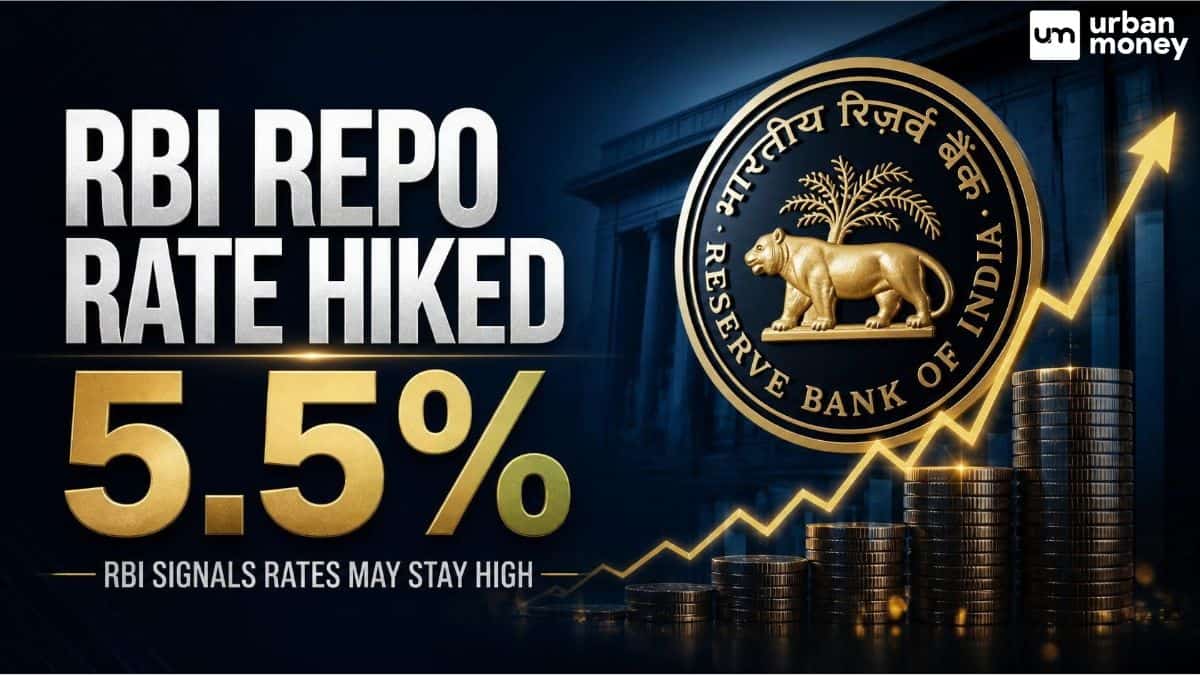
The Reserve Bank of India raised its key lending rate by 25 basis points on October 7, 2026, taking the RBI repo rate today to 5.5%. The repo rate is the rate at which commercial banks borrow money from the RBI, and when it moves, the cost of every home loan, personal loan, and business loan in the country moves with it. What made this meeting particularly significant was not just the rate action itself, but the unambiguous signal that accompanied it. The RBI has formally ruled out rate cuts in the near term, and future policy will move in only one of two directions, upward or flat.
To understand why the RBI raised the repo rate to 5.5%, it is important to look at what has been happening with prices across the economy. Inflation rose to 4.8% in August, but the more telling development was how broadly price increases have spread. For much of this year, rising costs were largely visible in fuel and a handful of food items. By August, that pattern had changed. Price pressures had begun appearing across a much wider range of goods, and the present RBI repo rate hike is a direct response to that shift.
Adding to this domestic picture is a global environment that offers little relief. The re-escalation of the West Asia conflict has pushed crude oil prices higher, a stronger US dollar is making imports more expensive for India, and rising interest rates in Western economies are increasing the cost of global capital. Each of these factors feeds into domestic prices, and collectively they give the RBI limited room to hold back on tightening.
Looking at the RBI repo rate history through this tightening cycle, the direction has been a measured but consistent climb upward driven by the need to bring inflation back under control. What sets this particular meeting apart is the deliberateness of the forward guidance. The RBI is not just raising rates, it is telling the market that this elevated rate environment is here to stay for some period. The repo rate change and shift to calibrated tightening mean the Committee has closed the door on any reversal until inflation shows a sustained and convincing move toward the 4% target. With prices projected to peak at 6% in the October to December quarter, that move remains some distance away.
The practical impact of the RBI’s new repo rate of 5.5% will begin to show up in home loan interest rates over the coming weeks as banks and housing finance companies revise their lending benchmarks. For those already servicing a floating-rate home loan, this translates into either a higher monthly outflow or a longer repayment period, depending on the loan agreement’s structure. For those taking a new home loan, today’s market rates reflect a meaningfully different cost environment than even six months ago. The repo rate increase has been steady and cumulative, and the lending market is now feeling its full weight.
Credit growth across the system, however, remains healthy and broad-based, reflecting the underlying strength of loan demand despite rising rates. Borrowing costs have risen, but appetite for home ownership and banks’ willingness to lend have not diminished.
The inflation data over the next two to three months will be the clearest signal of where the RBI repo rate goes from here. Food prices will be particularly important to watch, given that a weak monsoon season and El Niño weather conditions have created genuine supply side risks heading into the winter crop cycle. Crude oil prices, shaped largely by the ongoing situation in West Asia, will be the other major variable the RBI tracks closely before its next meeting.
For home loan borrowers navigating this environment, the most consequential decision is the choice between a fixed and a floating interest rate structure. With today’s repo rate at 5.5% and the RBI’s guidance pointing to no near-term relief, that choice carries real long-term financial weight. Urban Money, with access to 100+ lending partners across India, brings the comparative depth and unbiased perspective that allows home buyers to make that decision with clarity and confidence.



September 09, 2026
September 09, 2026
August 05, 2026
June 05, 2026
April 08, 2026
February 06, 2026






Top 10 Best Private Banks in India List 2025
January 09, 2025

Top10 List of Petrol Pump Companies in India
January 09, 2025

Dairy Farm Loan in 2025 : Online Procedure
January 09, 2025

Top 10 Best Bank for Home Loan In India…
January 09, 2025

Top10 Best Student Credit Cards in India 2025
January 09, 2025

Products & Offers

Tools & Calculators
CIBIL Score
Credit Cards
© 2026 www.urbanmoney.com. All rights reserved.


Need Loan Assistance?