


Top 10 Best Private Banks in India List 2025
January 09, 2025

December 10, 2025
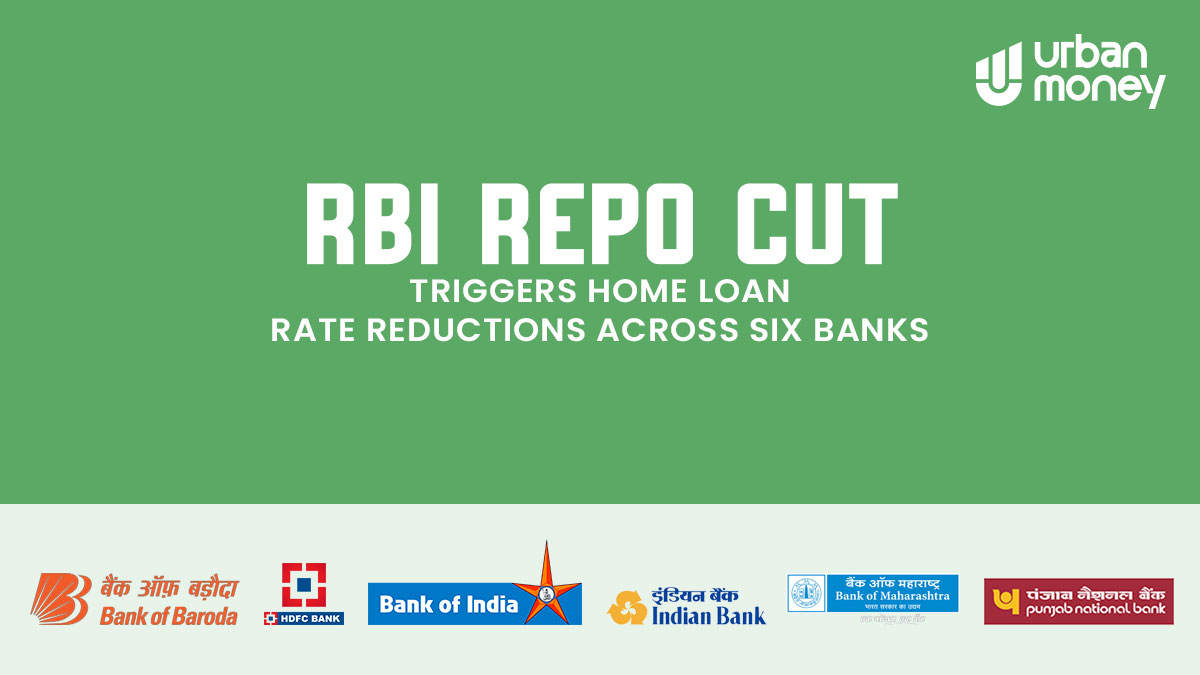
Following the RBI’s 5 December repo rate cut to 5.25%, six major banks have begun trimming home loan benchmarks, so borrowers may soon see lower interest rates on floating-rate loans and lighter EMIs on existing home loans and for fresh applications.
Home loan borrowers are set to get relief after the RBI’s December 2025 repo cut, with HDFC Bank, Punjab National Bank, Bank of Baroda, Indian Bank, Bank of India and Bank of Maharashtra all reducing home loan interest rates. Following the 0.25% cut in the repo rate from 5.50% to 5.25%, bank-wise home loan rates have begun to decline, with some offers now starting at around 7.10%. For new and existing borrowers, this home loan interest rate cut in the 2025 phase means lower EMIs or a shorter loan tenure, depending on their loan structure.
The RBI’s decision on 5 December 2025 to lower the repo rate by 25 basis points has quickly changed the lending market landscape. With the repo rate moving from 5.50% to 5.25%, banks now have a lower cost of funds, and the impact on home loan interest rates is already visible across major lenders.
This shift is essential because every reduction in the repo rate influences how banks price their floating-rate loans. For many borrowers, the home loan interest rate after the repo rate cut is the primary factor determining EMI behaviour over the next few months. The home loan interest rate has moved down across several benchmarks, including MCLR, RLLR, and RBLR, following the RBI announcement.
The repo rate revision has led to a visible round of reductions across major lenders. The 2025 updates on bank-wise home loan interest rate cuts show how each bank has adjusted its benchmark rates, and these revisions will shape how borrowers experience EMI changes in the coming months.
HDFC Bank has lowered its Marginal Cost of Funds-based Lending Rates by up to 5 basis points. The revised MCLR range now stands between 8.30% and 8.55%, up from 8.35% to 8.60%. This revision will help borrowers whose home loans are linked to the MCLR benchmark and are due for a reset.
Punjab National Bank has reduced its Repo Linked Lending Rate from 8.35% to 8.10%, including the benchmark spread premium. The change became effective on 6 December 2025 and applies to all loans linked to this benchmark.
Bank of Baroda has trimmed its Benchmark Retail Loan Lending Rate from 8.15% to 7.90%. This update provides slight relief for borrowers whose loans are priced against this benchmark.
Indian Bank has revised its Repo Linked Lending Rate from 8.20% to 7.95%. The bank has applied the new rate to its full lending portfolio from 6 December 2025.
Bank of India has lowered its Repo-Based Lending Rate from 8.35% to 8.10%, effective 5 December 2025. This move aligns the bank with the new pricing environment following the RBI’s decision.
Bank of Maharashtra has reduced its home loan interest rate from 7.35% to 7.10%. In addition, the bank cut car loan rates and waived processing fees on retail loans, making overall borrowing costs more favourable.
Even with banks announcing fresh reductions in home loan interest rates, the final rate a borrower receives can vary widely. Headline rates act as a starting point, but lenders use several internal checks to decide the effective rate for each applicant. These checks include:
A slight change in the lending rate can significantly affect monthly repayments, especially on long-term loans. The latest reductions mean many borrowers will now see lower EMIs or a shorter remaining tenure, depending on their loan structure.
₹20 Lakh Loan Over 20 Years
When the rate moves from 8% to 7.75%, the EMI falls from roughly ₹16,729 to about ₹16,419. The monthly difference of ₹310 may seem small on its own, but it reduces the total interest outgo by nearly ₹74,000 over the whole tenure.
₹30 Lakh Loan Over 20 Years
For a ₹30 lakh loan, the EMI shifts from around ₹25,093 to about ₹24,628 after the same 0.25% cut. Saving about ₹465 per month reduces interest by roughly ₹1.12 lakh over time.
The home loan interest rate cut in the December 2025 phase does not impact every borrower in the same way. The benefit depends on whether the loan is already in place or has yet to be taken, and on the benchmark the lender uses to price it.
Borrowers linked to RLLR or RBLR often experience faster transmission because these benchmarks move in lockstep with the repo rate. When the lender updates the benchmark, the loan’s effective rate adjusts at the next scheduled reset. For MCLR-linked loans, the reduction usually appears on a quarterly or half-yearly reset date. Some borrowers will notice a lower EMI, while others may see their tenure shortened if the bank keeps the EMI steady.
Fresh applicants will now begin their home loan journey at lower starting rates. Even a slight difference at the beginning can help reduce interest costs over the whole tenure. New borrowers should still compare the full offer, including spreads, fees, and reset frequency, since the headline rate is only one part of the final pricing.
Start by checking which benchmark your home loan uses, as this determines how quickly the new rate takes effect. Loans linked to RLLR or RBLR usually adjust earlier since these benchmarks track the repo rate more closely. MCLR-linked loans reset only on fixed dates set by the bank, so the home loan interest rate after the repo rate cut will reflect the change with a slight delay.
It’s helpful to look at your current effective rate and compare it with what your bank is offering new customers after the repo cut. If the gap is large, you can ask the bank about internal repricing. This is often cheaper and easier than shifting the entire loan.
For borrowers still paying an older amount, a home loan balance transfer becomes an option. But this only works well when the remaining loan tenure is long enough to justify the processing fees and other charges. A quick calculation with your current EMI and the new rate can help you decide whether the switch makes sense.
Keeping track of your next reset date matters. Most borrowers only notice rate changes when their EMI updates, so checking this timeline helps you understand when the adjustment will show up.
The repo cut has led banks to review their lending benchmarks. As they update spreads and pricing, the home loan interest rate is settling at lower levels than before the RBI announcement, and below December 2025 levels. Many borrowers will notice this in new sanction letters and updated loan statements.
With the new benchmarks in place, EMIs will change as loans reach their next reset date. More banks may revise rates further as the policy moves slowly through their loan books.
Banks reduced their lending rates because the RBI lowered the repo rate from 5.50% to 5.25% on 5 December 2025. When the repo rate falls, banks' cost of funds decreases. This allows lenders to reduce benchmarks such as MCLR, RLLR, and RBLR, thereby lowering home loan pricing for borrowers.
Six major lenders have announced reductions: HDFC Bank, Punjab National Bank, Bank of Baroda, Indian Bank, Bank of India and Bank of Maharashtra. Each bank has updated its benchmark differently, ranging from MCLR cuts to reductions in repo-linked rates.
For a ₹20 lakh loan over 20 years, the EMI drops by about ₹310 when the rate moves from 8% to 7.75%. A ₹30 lakh loan results in an EMI reduction of approximately ₹465. The final figure may vary based on spreads and the exact benchmark your bank uses.
A balance transfer only makes sense when the difference between your current effective rate and the new offer is meaningful, and when you have a long tenure left. Processing fees, legal checks and valuation charges should be included in your calculation before you decide.
Your loan may be linked to an older benchmark or spread. Many older loans carry a higher margin over MCLR or repo-linked benchmarks, which does not automatically reduce after policy changes. You may need to request a repricing from your bank.
Fixed-rate loans do not automatically adjust after RBI policy changes. The rate remains unchanged for the fixed period agreed in the loan agreement. Only when the loan transitions to a floating structure does it begin to respond to benchmark revisions.
Yes. Bank of Maharashtra now offers home loan rates starting at 7.10% after its latest revision. Other banks have reduced rates as well, but their starting points vary by benchmark and spread structure.



June 18, 2025

April 03, 2025

March 25, 2025
March 25, 2025

March 24, 2025

March 24, 2025






Top 10 Best Private Banks in India List 2025
January 09, 2025

Top10 List of Petrol Pump Companies in India
January 09, 2025

Dairy Farm Loan in 2025 : Online Procedure
January 09, 2025

Top 10 Best Bank for Home Loan In India…
January 09, 2025

Top10 Best Student Credit Cards in India 2025
January 09, 2025

Products & Offers

Tools & Calculators
CIBIL Score
Credit Cards
© 2026 www.urbanmoney.com. All rights reserved.


Need Loan Assistance?