Top 10 Best Private Banks in India List 2025
January 09, 2025

February 06, 2026
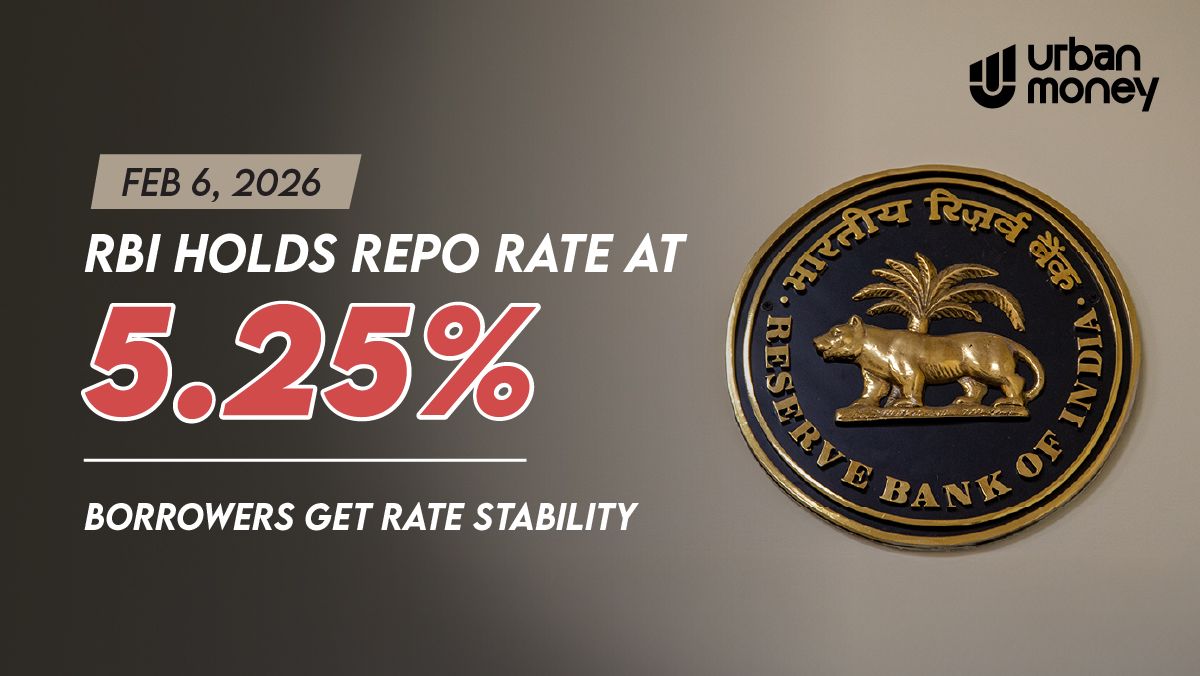
The Reserve Bank of India on Friday 6, 2026 held the RBI repo rate at 5.25%, opting for policy continuity amid steady domestic growth.
February 6, 2026: The Reserve Bank of India has decided to leave the repo rate unchanged at 5.25%, choosing not to alter borrowing costs in its first policy review after the Union Budget 2026-2027. The decision was announced on February 6, following the Monetary Policy Committee meeting that ran from February 4 to February 6. The panel voted unanimously to hold rates.
Banks, NBFCs and public sector lenders have not made any policy changes following the RBI’s decision.
In the latest RBI news regarding repo rate, the central bank retained a neutral stance, indicating a wait-and-watch approach. RBI Governor Sanjay Malhotra said growth conditions remain stable and inflation is well within control. The policy rate, according to the RBI, is appropriate at this stage as earlier rate cuts are still working through the system. This RBI policy news comes at a time when global uncertainty remains high, but domestic macro conditions continue to show resilience.
For borrowers tracking repo rate live news, the key takeaway is near-term stability. Banks are not expected to change lending rates in the immediate term, but future revisions cannot be ruled out as market conditions evolve.
An unchanged repo rate typically keeps loan pricing steady. Home loans and personal loans linked to the repo rate or external benchmarks may not see any immediate change in EMIs. Fixed deposit rates are also expected to stay largely stable unless banks adjust deposit rates based on liquidity needs. For savers, this means FD returns are unlikely to rise sharply in the near term, while borrowers benefit from predictable repayment schedules.
The RBI repo rate impact on home loan interest rate depends on how quickly banks transmit policy changes. Since the current rate has been retained, home loan interest rates are expected to remain at existing levels. Borrowers on repo-linked loans will continue to pay interest based on the prevailing rate unless banks revise spreads.
Since early 2025, the RBI has reduced the policy rate by a cumulative 125 basis points. These cuts have lowered borrowing costs across retail loan segments. Home loan borrowers, in particular, have seen meaningful savings on EMIs over the past year, especially those with floating-rate loans linked to the repo rate. The current pause allows borrowers to fully benefit from these earlier reductions.
Along with the rate decision, the RBI revised up real GDP growth projections for the first two quarters of FY27. This reflects confidence in income stability, employment trends, and domestic demand. Retail inflation for FY26 has been projected at 2.1%, keeping the RBI comfortable on the price front. These projections support the central bank’s decision to avoid further rate changes for now.
Going ahead, borrowers and investors should track inflation data, global developments, and liquidity conditions. Any sharp movement in prices or external risks could influence future policy decisions. For now, the RBI has signalled continuity rather than change.
The last repo rate cut was announced in December 2025, when the RBI reduced the rate by 25 basis points.
The RBI wants to assess the impact of earlier rate cuts while maintaining balance between growth and inflation.
Most floating-rate home loans and some retail loans are linked to the repo rate through external benchmark lending rates.
Repo-linked loans offer better transparency, but borrowers should compare spreads, reset periods, and overall costs before switching.
You can check your loan agreement or contact your lender to confirm if your interest rate is linked to the repo rate.


April 08, 2026
February 01, 2026

January 30, 2026
January 28, 2026
December 05, 2025
November 28, 2025






Top 10 Best Private Banks in India List 2025
January 09, 2025

Top10 List of Petrol Pump Companies in India
January 09, 2025

Dairy Farm Loan in 2025 : Online Procedure
January 09, 2025

Top 10 Best Bank for Home Loan In India…
January 09, 2025

Top10 Best Student Credit Cards in India 2025
January 09, 2025

Products & Offers

Tools & Calculators
CIBIL Score
Credit Cards
© 2026 www.urbanmoney.com. All rights reserved.


Need Loan Assistance?