Top 10 Best Private Banks in India List 2025
January 09, 2025

December 05, 2025
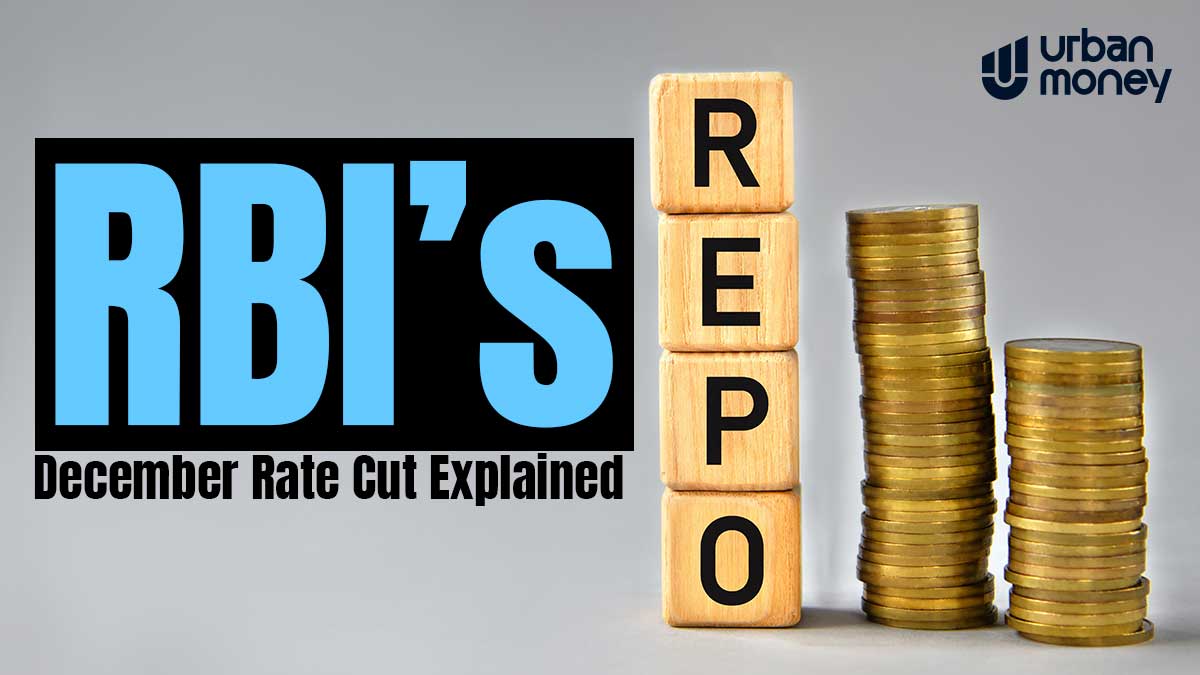
RBI has rolled out another repo rate cut on 5th December with immediate effect. The rate has come down to 5.25% after a 25 basis point cut. This entails that home loan EMIs may come down for many borrowers.
The RBI rate cut latest news has confirmed that the Monetary Policy Committee (MPC) has reduced the repo rate to 5.25 per cent. This move came after months of low inflation and steady economic growth. The decision has also brought attention to liquidity measures announced alongside the rate cut. These steps make it easier for banks to access funds and support lending as the year comes to a close. People looking for repo rate cut updates today have shown strong interest because this policy change affects loans, savings, and broader market behaviour.
The repo rate by RBI plays a central part in how money moves through the economy. It influences the cost of home loans, business loans and day-to-day borrowing for millions of people. When the Reserve Bank of India adjusts this rate, banks follow with their own changes, and the effects reach households quite quickly. The December 2025 policy meeting brought another shift in the rate cycle, and many borrowers are now trying to understand what this means for their monthly payments and for the broader market.
A rate cut usually leads to lower borrowing costs, and this is where most people notice the difference first. When the repo rate drops, banks can access funds at a cheaper rate. Over time, this reduces loan interest for customers, especially those on floating home loan plans. The December announcement has brought many people back to home loan EMI calculator as they try to work out the repo rate cut’s impact on their monthly payments. Even a small shift can change the total amount paid over the full length of a home loan.
Below you have an example which showcases changes in your EMI payments pre and post the change in repo rate as per 2025 policy meeting:-
| Loan Amount | Tenure | Old EMI (Approx.) | New EMI after repo rate cut Dec 2025 | Monthly Difference |
| ₹20,00,000 | 20 years | ₹15,500 | ₹15,190 | ₹310 lower |
| ₹30,00,000 | 20 years | ₹23,250 | ₹22,785 | ₹465 lower |
Lower home loan interest rates often shift how people view property purchases, and the December decision is likely to have a similar effect. When borrowing becomes a little easier, families who were waiting for the right moment tend to revisit their plans.
Developers also pay close attention because smoother credit conditions make ongoing projects easier to manage. In many cities, a small rate cut can lift sentiment enough to draw more enquiries and site visits. The softer rate environment may also help builders offer flexible schemes or revive stalled interest in certain neighbourhoods.
As banks begin adjusting their loan rates, the repo rate cut impact may show up in the form of renewed housing interest, especially if the broader climate of low inflation continues.
A policy shift affects different groups in different ways. Some people welcome cheaper loans, while others worry about the return on their savings. This contrast is why many wonder whether the repo rate cut is good or bad; the answer depends on each person’s situation.
| Pros | Cons |
| Homebuyers may benefit from lower EMIs as banks start adjusting lending rates. | Fixed deposit rates may fall, which affects people who rely on interest income. |
| Businesses that depend on credit can manage costs more comfortably. | If demand rises too sharply, there is a risk of inflation increasing later. |
| Better liquidity often supports growth in sectors like real estate and automobiles. | Some banks take longer to pass on benefits, creating uneven changes for customers. |
| Lower borrowing costs can encourage investment during periods of stable inflation. | Borrowers with fixed-rate loans might not see any immediate relief. |
The repo rate has moved through many stages over the years, shaped by inflation trends, global events and changes in domestic demand. Understanding this background helps place the recent cut in context. The year 2025 alone has seen several adjustments, and they form an important part of the broader repo rate cut history.
Interest rates in 2026 will mostly depend on how prices move in the coming months. Right now, inflation is low, but that can change quickly if a few bad numbers come in. If prices stay under control, the RBI may keep rates where they are for some time.
Borrowers who want long-term home loans are already watching the next MPC meetings closely, because even a small change can affect their EMIs for many years. Some experts are also looking at global factors like oil and other commodity prices, since these can quietly push up costs at home. After the latest RBI rate cut in December 2025, most analysts are taking a wait-and-watch approach rather than making bold calls for 2026.
The December 2025 policy move has brought a noticeable shift in the conversation around borrowing, housing and the wider economy. Cheaper credit often changes how people plan their finances, and the early signs suggest that many borrowers are already considering the new lending rates. Markets will continue to watch how banks respond and how the next round of data shapes the central bank’s choices. For now, the tone of policy feels steady, and the effects of the repo rate cut impact will become clearer as lenders adjust their pricing in the months ahead.
The repo rate of RBI is the interest rate at which the Reserve Bank of India lends money to banks for short periods. When this rate changes, loan and deposit rates in the country slowly move in the same direction.
After a repo rate cut by the RBI, banks can borrow at a lower cost. When they pass on this benefit, the interest rate on floating home loans usually falls, and the EMI reduces. The change may not be instant, but it builds up over time.
The repo rate cut impact for a homebuyer is mainly seen in smaller EMIs and lower total interest over the loan period. The repo rate cut effect can also make banks launch fresh loan offers, which sometimes improves affordability for first-time buyers.
For borrowers, cheaper loans are helpful, so a cut feels positive. Savers may see fixed deposit rates fall, which is less welcome. The wider economy gains support, but there is always a risk that too much demand could lift prices later. This mix makes the repo rate cut good or bad a tricky question.
The repo rate cut of 2025 should lower costs for people on floating-rate loans once banks revise their benchmarks. Many borrowers will see the benefit at their next reset date. The RBI rate cut latest news is mainly a signal that their EMIs are likely to move down rather than up.
Looking at the repo rate cut history shows that rates move in cycles, reacting to inflation and growth. There have been phases of sharp cuts, periods of steady rates and times when the bank raised rates to control prices. This background helps borrowers understand that today’s settings can change again in the future.


October 07, 2026

September 09, 2026
September 09, 2026
August 05, 2026
June 05, 2026
April 08, 2026






Top 10 Best Private Banks in India List 2025
January 09, 2025

Top10 List of Petrol Pump Companies in India
January 09, 2025

Dairy Farm Loan in 2025 : Online Procedure
January 09, 2025

Top 10 Best Bank for Home Loan In India…
January 09, 2025

Top10 Best Student Credit Cards in India 2025
January 09, 2025

Products & Offers

Tools & Calculators
CIBIL Score
Credit Cards
© 2026 www.urbanmoney.com. All rights reserved.


Need Loan Assistance?