


Top Shopping Credit Cards in India 2025
High shop earn

Milestone perks

- Home
- Credit Card
- Best Shopping Credit Cards
Popular Shopping Credit Card Offers
Scout through some of the best hand-picked credit card offers.
Categories

Cashback

Online Shopping

Lifetime Free

Rewards
Shopping

Fuel

Movies

Travel

Dining

Premium

Lounge Access
Filter
Banks

HDFC Credit Card

IndusInd Bank

HSBC Credit Card

BOB Credit Card

IDFC First Credit Card

AU Small Finance Credit Card

Yes Pop-Club Credit Card

SBI Credit Card

Axis Credit Card


TATA NEU PLUS Credit Card
Shopping

Joining Fee: ₹500

Annual/Renewal Fee: ₹500
- Save up to 7% on Tata Neu.
- Complimentary lounge access.
- Upto 2% value back as NeuCoins.
+ More Details


Platinum Aura Edge Credit Card
Rewards
Shopping
Joining Fee: ₹0
Annual/Renewal Fee: ₹0
- Vouchers of top brands at time of joining.
- Redeem reward points against cash credit.
- 1% fuel waiver up to Rs. 100 on Rs. 500–3,000 transactions.
+ More Details

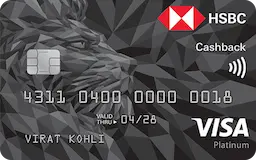
HSBC Visa Platinum Credit Card
Shopping
Lifetime Free
Rewards
Joining Fee: Nil
Annual/Renewal Fee: Nil
- No joining/annual fee.
- Up to 5x reward points.
- Annual fee waived on spending above ₹8 lakh in a year.
+ More Details

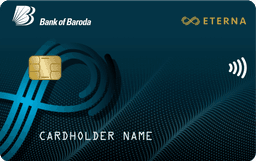
BOBCARD Eterna
Travel
Movies
Shopping
Joining Fee: Nil
Annual/Renewal Fee: Nil
- Points can be redeemed for cashback or products.
- Zero liability on lost cards, contactless payments, and fraud protection.
- Smart EMI options to convert purchases above ₹2,500 into EMIs.
+ More Details


FIRST Classic Credit Card
Shopping
Lifetime Free
Rewards
Joining Fee: Nil
Annual/Renewal Fee: Nil
- Up to 10X reward points.
- Upto 25% discount on tickets.
- No joining/annual fee.
+ More Details
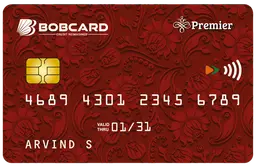
BOBCARD Premier
Travel
Dining
Shopping
Joining Fee: ₹1,000
Annual/Renewal Fee: ₹1,000
- Earn rewards for every spent upto ₹100.
- Get next year’s annual fee waived on ₹1,20,000 annual spend.
- Enjoy 4 complimentary airport lounge visits per year.
+ More Details

MONEYBACK PLUS Credit Card
Shopping
Rewards
Joining Fee: ₹500
Annual/Renewal Fee: ₹500
- Convert big purchases into easy EMIs.
- Contactless payments up to Rs. 5,000.
- Get 500 CashPoints on joining fee.
+ More Details

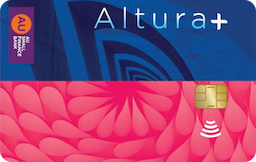
AU Altura Plus Credit Card
Shopping
Rewards
Joining Fee: ₹499 + Taxes
Annual/Renewal Fee: ₹499 + Taxes
- Vouchers worth Rs.500 on Rs. 10,000 spend.
- Upto 2 reward points per Rs.100 spent on online.
- Upto 2 complimentary lounge access per calendar quarter at railway stations.
+ More Details
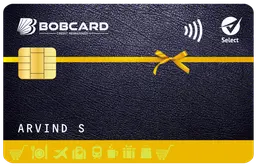
BOBCARD Select
Dining
Shopping
Rewards
Joining Fee: Nil
Annual/Renewal Fee: Nil
- Fuel surcharge waiver on transactions Upto ₹5,000.
- Get next year’s annual fee waived on ₹70,000 annual spend.
- Earn rewards point on every spent.
+ More Details


ACE Credit Card
Shopping
Rewards
Online Shopping
Joining Fee: ₹499 + taxes
Annual/Renewal Fee: ₹499 + taxes
- 4X rewards on online spends.
- 2X rewards on offline spends.
- 1% fuel surcharge waiver on fuel spends.
+ More Details

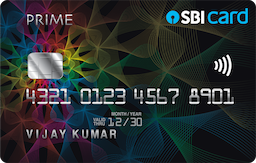
SBI Card PRIME
Travel
Shopping
Rewards
Joining Fee: ₹2,999 + Taxes
Annual/Renewal Fee: ₹2,999 + Taxes
- Vouchers on shopping from Bata, Hush Puppies, Pantaloons, Shoppers Stop, Aditya Birla, Yatra.
- Complimentary domestic/international lounge visits yearly.
- 5X rewards on dining, movies & grocery.
+ More Details
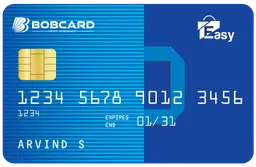
BOBCARD Easy
Movies
Shopping
Rewards
Joining Fee: Nil
Annual/Renewal Fee: Nil
- Get next year’s annual fee waived on ₹35,000 annual spend.
- Fuel surcharge waiver on transactions Upto ₹5,000.
- Earn rewards point on every spent.
+ More Details

TATA NEU INFINITY Credit Card
Shopping
Joining Fee: ₹1,499 + taxes
Annual/Renewal Fee: ₹1,499 + taxes
- 1,499 NeuCoins on first Tata Neu transaction.
- Low 2% forex markup fee.
- 8 domestic + 4 international lounge visits/year.
+ More Details

BOBCARD Tiara
Movies
Shopping
Travel
Joining Fee: ₹2,499
Annual/Renewal Fee: ₹2,499
- Women's special card with more benefits.
- Get next year’s annual fee waived on ₹2,50,000 annual spend.
- Enjoy a complimentary 12-month FitPass Pro membership worth ₹48,000.
+ More Details


AXIS BANK SELECT Credit Card
Shopping
Rewards
Joining Fee: ₹3,000 + taxes
Annual/Renewal Fee: ₹3,000 + taxes
- Complimentary lounge access worldwide.
- Discount on Swiggy, BigBasket & District apps.
- 2X rewards across all retail spends.
+ More Details

REGALIA GOLD Credit Card
Travel
Shopping
Rewards
Joining Fee: ₹2,500 + taxes
Annual/Renewal Fee: ₹2,500 + taxes
- Upto 5X rewards on Nykaa, Myntra & more.
- Complimentary domestic & international lounge access.
- Gift voucher worth Rs. 2,500 on payment of joining fee.
+ More Details
What are Shopping Credit Cards?
Shopping credit cards are designed to reward everyday retail transactions such as groceries, fashion, pharmacy, electronics, and large online orders. Every transaction is classified into a merchant category, and eligible “shopping” categories earn higher cashback, points, or miles than regular spend categories. Banks and Indian comparison platforms regularly review and update their shortlists of the best shopping credit cards, so you can compare features, rewards, and fees before choosing one.
Key Features of Shopping Credit Cards
A best card for shopping lives or dies by its earning rules. Read the features that actually affect savings, not just the headline offer:
- Category multipliers: Many cards award higher cashback or points for supermarket, pharmacy, and fashion spends; base rates apply elsewhere. Check monthly caps in the issuer sheet.
- Partner tie-ups: Shopping credit cards often run limited-time deals with significant marketplaces; verify the current card page before sale days.
- Redemption choices: Most let you redeem as a statement credit or vouchers, while some show point expiry windows in T&Cs (typically 2 years).
- EMI at checkout: If you plan to buy a big appliance cart, check the bank’s EMI flow and charges in advance.
- Online safety: Card-not-present payments in India follow RBI authentication/tokenisation norms; issuers are moving to risk-based checks by April 1, 2026.
Types of Shopping Credit Cards
When you shortlist the best credit cards for grocery shopping, or compare general shopping credit cards, group them by how they pay you back.
- Flat-rate cashback: One simple rate across retail categories, with a monthly ceiling. Easy to track.
- Category boosters: Higher earnings on groceries/pharmacy/fashion; base rate elsewhere. Good if your spending is concentrated.
- Co-branded/store-first: Store credit cards or shop credit cards tied to a retailer/marketplace; strong during brand sale events.
- Hybrid rewards: Earn points, then convert to vouchers or statement credit for whichever gives better value that month.
How do Shopping Credit Cards Differ from Regular Credit Cards?
The best credit card for shopping focuses on where you spend, not just how much, so the rules feel different from plain, no-category cards.
- Targeted earnings: Shopping variants boost MCCs (merchant category codes) like grocery and apparel; plain cards generally pay a flat base.
- Calendar caps: Bonus earnings usually stop after a monthly/statement cap; regular cards may have fewer category caps.
- Partner windows: Retail tie-ups change with campaigns; generic cards rarely rely on partner calendars.
How do Shopping Credit Cards Work?
If you want the best credit card for both offline and online shopping, it helps to know how rewards are tracked end-to-end. Here is how shopping credit cards work:
- MCC tagging: Networks assign an MCC to each merchant; your issuer rewards based on that code, not the store’s brand promise. (Grocers must actually code as grocery.)
- Earning and capping: You earn at boosted rates until the card’s monthly cap is reached, then it drops to the base rate for the rest of the cycle.
- Redemption: Use the bank app/portal to convert points to vouchers or statement credit; watch point expiry.
- Online security: India uses tokenisation and strong customer authentication for card-not-present transactions to reduce exposure for merchants.
Eligibility Criteria For Shopping Credit Cards
Before applying for the best credit card for shopping, check the basics most issuers use for screening in India.
- Age & profile: Adult applicants (commonly 18/21+) with salaried or self-employed income.
- Credit history: A healthy credit score and a clean repayment history improve approval odds.
- KYC: Banks must complete due diligence in accordance with the RBI’s KYC Master Direction (updated 2025).

Documents Required for Shopping Credit Cards
Planning to compare shopping credit cards and apply online? Keep the usual KYC and income proofs handy.
- Identity & address: Aadhaar, Passport, Driving Licence, or Voter ID (masked Aadhaar as per bank format).
- PAN / Form 60: PAN is standard for credit cards; Form 60 is used in limited cases.
- Income: Salary slips/bank statements for salaried; ITRs/audited financials for self-employed.
How to Apply for Shopping Credit Cards through Urban Money?
If you want the best card for shopping without juggling tabs, a marketplace flow is more effortless. Compare on Urban Money:
- Open a card page, read earn rates, caps, and fees in one place; then hit Apply.
- Submit details + KYC.
- Fill in basics, upload ID/address/income proofs.
- The bank completes verification next.
Why Use a Shopping Credit Card?
A focused card beats a generic one when most of your bills are retail. The best grocery store credit card puts food and essentials on a higher earn track. It is considered the best credit card for shopping, covering fashion, electronics, and festivals.
- Bigger return on the same spend. Category boosters can beat flat cards for families who shop weekly.
- Sale-day stacking. Partner events can stack with bank offers to boost adequate savings, making purchases more worthwhile.
- Flexible redemption. If voucher value dips, use statement credit instead.
Fees for Shopping Credit Cards
Don’t let fees eat your gains. Before you choose the best credit card for shopping, run the calculations against your basket size.
- Joining/renewal: Ranges by product; some waive the annual fee after you hit a yearly spend. Issuers disclose these on pricing pages.
- Finance charges: Revolving balances trigger interest, which can quickly erase cashback.
- EMI charges: Bank EMI on large carts has interest/processing fees, so read the EMI guide before opting in. A credit card EMI calculator helps you compare interest costs across tenures.
How to Compare Shopping Credit Cards
The best credit card for shopping is the one that matches your real-world cart, not a brochure. Here is how you can compare them:
- Where do you spend: Groceries vs fashion vs pharma: pick the card that boosts your top categories.
- Monthly caps: Ensure the cap isn’t lower than your typical monthly bill.
- Redemption value: Cashback vs voucher value; both change over time and by partner.
- Partner list today: Co-branded cards shine during current campaigns, not last year’s.
- All-in cost: Annual fee minus expected rewards at your spend level; if marginal, pick no/low-fee.
Tips to Maximise Your Savings through Shopping Credit Cards
To squeeze the most from shopping credit cards, set a simple routine and stick to it. Have a look at some tips to enhance your savings using these cards:
- One card per purpose: Keep a grocery-first card for essentials and another for big e-commerce sale weeks.
- Time large buys: Convert to EMI only when promos offset fees; read the issuer’s EMI explainer first.
- Watch expiry: Points can lapse if they go unused, so use them or switch to cashback redemptions.
- Secure checkout: Prefer tokenised cards and follow the bank’s 2FA prompts on every online order.

 Written By

 Reviewed By
Last Updated: 9th December 2025
Frequently Asked Questions (FAQs)
How do Shopping Credit Cards offer rewards or cashback?
Shopping Credit Cards pay higher rates on retail MCCs (groceries, apparel, pharmacies) and base rates elsewhere; then credit cashback or points to your account. Caps are common.
Can Shopping Credit Cards be used for online and offline purchases?
Yes, Shopping Credit Cards can be used for online and offline purchases. POS and e-commerce both earn per the card’s grid; online payments follow RBI authentication/tokenisation norms.
Are there limits or caps on cashback and rewards?
Usually, a monthly or statement cycle cap; once crossed, you drop to base earn for that period.
Do Shopping Credit Cards offer additional benefits besides rewards?
Some add sale-day tie-ups, partner coupons, or lounge/insurance on higher tiers; check the live product page.
How safe is it to use Shopping Credit Cards for online transactions?
India is moving to risk-based 2FA by April 1, 2026, but tokenisation and OTP remain in play until then; issuers handle compliance.
How can I check and redeem rewards or cashback?
Use your bank’s app/portal; you’ll see balances, expiry (if any), and a redeem button for vouchers or statement credit.
Are there fees associated with Shopping Credit Cards?
Yes: joining/renewal fees and interest if you revolve; EMI and processing charges may apply on conversions. Read the product pricing and EMI guides.
Can I hold multiple Shopping Credit Cards?
Yes, many split one card for groceries and another for fashion/e-commerce to ride two sets of caps. Keep fees in check and avoid spreading spending too thin.
What about buying a car on a credit card?
Some dealers allow it with a convenience fee and an amount cap; policies vary. Run the numbers (fee + interest) and check your issuer and dealer policy before attempting it. Recent explainers in India outline pros and cons.
Most Popular on Urban Money
More Categories You Like
Shopping Credit Cards from Other Banks

